Look, your high school senior year is going to be a total whirlwind. One second you are hanging out with friends in the hallways, and the next, you are staring blankly at a laptop screen realizing college is actually happening. It is a super bittersweet time. The nostalgia hits you out of nowhere, but the hype for your next chapter hits even harder. Let’s be completely honest though—trying to survive your daily classes while figuring out your whole future is exhausting. The stress of endless applications, annoying financial aid forms, and those scary standardized tests can drive anyone crazy.
But you don’t need to stress out. mystudynest has put together the perfect roadmap to help you handle all of this without losing your mind. If you just keep a close eye on your college application deadlines right from day one, you can easily avoid those midnight panic attacks. You will actually get to enjoy your last year with your friends while locked into your dream school.
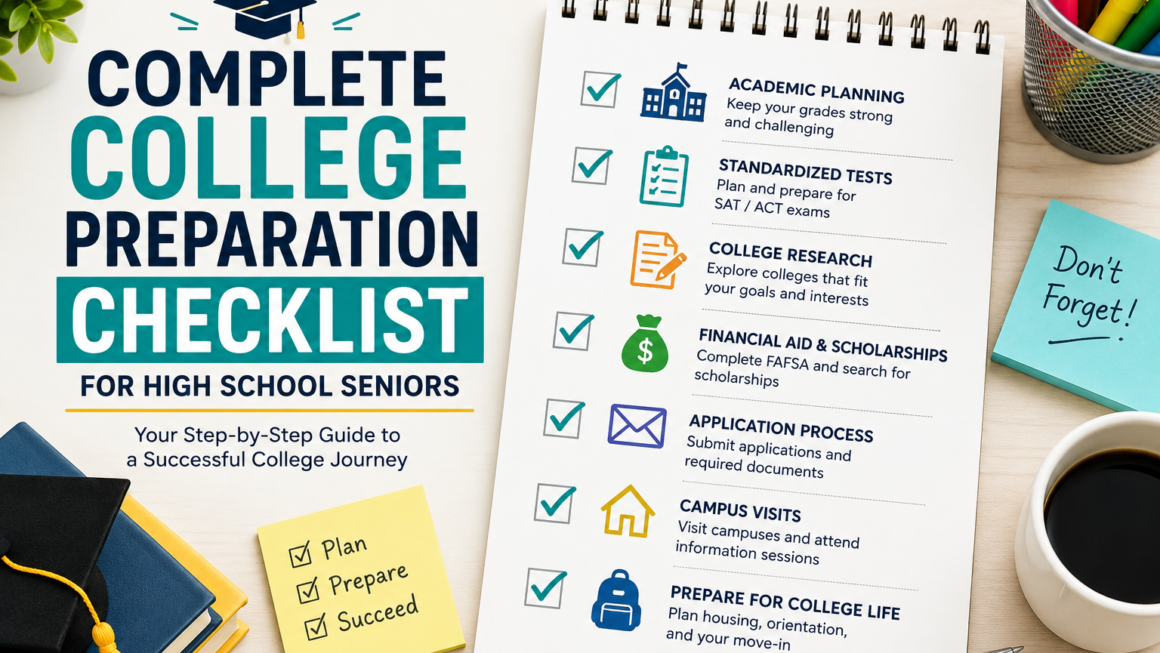
To keep things simple and realistic, we broke the whole year down into small, bite-sized tasks you can handle month by month.
Phase 1: The Summer Before Senior Year (June – August)
The real secret to surviving senior year without burning out is starting early during the summer. Think about it. You have zero daily homework assignments, no random pop quizzes to worry about, and no exhausting high school extracurricular activities taking up your energy after a long day. This free time is your golden window to build a solid foundation before the real school chaos begins.
1. Map Out Where You Want to Apply
Don’t just throw names on a paper because they sound cool. Sit down and craft a sensible list of around 8 to 12 campuses. Try dividing them up into three realistic buckets:
- Reach Schools: Your ultimate dream colleges. These spots are insanely competitive. Your GPA or current test scores might sit a tiny bit lower than their typical freshman middle-range.
- Match/Target Schools: Your safe bet zone. Your high school numbers sit right in line with what they look for every single year.
- Safety Schools: Your backup options. These are schools where your grades easily beat out their average entry requirements, giving you an almost guaranteed “yes.”
2. Know Your Application Options
Every single university has its own set of rules for how and when you can apply. Learning these basic terms now will save you from a massive headache later:
- Early Decision (ED): This is a 100% binding contract. If they accept you, you legally have to go there and drop all your other applications immediately.
- Early Action (EA): A much safer, non-binding choice. You apply early (usually around November) and get your answer by January, but you don’t have to commit until May.
- Regular Decision (RD): The normal, traditional path that most seniors take. These deadlines usually drop around January or February.
- Rolling Admissions: First-come, first-served. They look at applications as they come in and keep accepting people until the freshman seats are totally full.
3. Get a Head Start on Your Essay
Your personal statement is the best chance to show admissions officers the real person behind the dry numbers and grades. Don’t wait until the school year gets crazy. Start looking at the official common app essay prompts around July or August. Typing out a couple of messy rough drafts during summer break gives you tons of time to edit and get feedback from your favorite teachers.
Phase 2: Fall Semester – Time to Execute (September – November)
Once September hits, the clock starts ticking super fast. This is the official crunch time where your summer research needs to turn into actual submissions.
1. Finish Your Standardized Tests
If you still need to boost your scores or haven’t taken the exams yet, these early fall test dates are your absolute last shot.
- Block out a little time every week for focused SAT test prep or consistent ACT test preparation to get those scores up.
- Make sure you check the exact admission rules for every school on your list. Tons of campuses changed their policies permanently, so see if you are applying to test-optional colleges where sending scores is completely up to you.
2. Ask for Letters of Recommendation
Colleges want to know what you are actually like as a human being in a classroom. That is why your letters of recommendation matter so much.
- Find two core teachers (like Math, Science, or English) who actually like your vibe and work ethic, plus your school guidance counselor.
- Ask them early in September before every other student starts begging them. Give them a quick student resume or a “brag sheet” with cool stories about your achievements so they have plenty to write about. Give them at least a month’s notice.
3. Protect Your GPA
It is incredibly easy to catch a bad case of “senioritis” and just want to cruise through your final year. Do not do that. Admissions teams look really closely at your senior year schedule and your mid-year grades. You have to work hard to maintain your high school GPA, especially if you are taking tough AP or IB classes. A bad slip-up right now can ruin months of hard work.
Phase 3: Winter – Money Matters & Submissions (December – February)
Winter is all about locking in your applications and making sure you can actually afford your higher education.
1. Sort Out Your Financial Aid
College is expensive—there is no point in hiding it. That is why figuring out financial aid for college needs to be at the very top of your winter checklist.
- Sit down with your parents and fill out the fafsa application (Free Application for Federal Student Aid) the minute it opens up. This single form is what unlocks federal grants, cheap student loans, and work-study jobs on campus.
- Keep in mind that some private or elite schools might also ask you to fill out the CSS Profile to get a deeper look at your family’s financial setup.
2. Hunt for Scholarships
Do not just sit around hoping federal aid covers everything. Make it a habit to spend an hour or two every weekend looking for external scholarships for high school seniors. There are millions of dollars left on the table every year for students with specific majors, community service hours, unique hobbies, or specific cultural backgrounds.
3. Hit the Submit Button
Go through your portals one last time. Check your spelling, read over your short answer prompts, make sure your transcripts are uploaded, and submit. Most Regular Decision deadlines lock up on January 1st or January 15th, so don’t wait until 11:59 PM on deadline night when the website servers are crashing.
Phase 4: Spring – The Waiting Game Ends (March – May)
Spring is when all that exhausting waiting finally pays off. The acceptance letters start hitting your inbox, and you have some huge life decisions to make.
| Step | What You Need to Do | The Deadline |
| Check Offers | Read through your acceptances and financial aid details. | Mid-April |
| Do the Math | Compare real out-of-pocket costs and watch out for bad debt. | Late April |
| Commit | Pick your final school and pay your deposit. | May 1st |
1. Compare Your Award Letters
Getting that “Congratulations!” email is the best feeling ever, but you need to read the fine print. Sit down and compare every single financial aid award letter side-by-side. Look at the “net cost” (what you actually have to pay out of your own pocket) instead of the scary sticker price. Try your best to avoid taking on heavy student loans that will take you forever to pay off.
2. Celebrate National Decision Day
In the US, May 1st is the famous National Decision Day. This is the hard deadline where you have to pick your final school, pay your enrollment deposit, and tell the other colleges “thanks, but no thanks” so they can give those spots to waitlisted students.
3. Finish Strong
Your acceptance letter is conditional. The college expects you to finish high school with the same drive you had when you applied. Once you graduate, your school counselor will mail your final official transcript to your new college. If your grades completely tanked in the final semester, a university can—and absolutely will—cancel your admission.
Phase 5: Summer Before College – The Transition (June – August)
You made it! You are officially a college student. But before you start packing your bags, there are just a few final details to sort out.
1. Go to College Orientation
Do not skip your college orientation sessions. Yes, some of the icebreaker games can feel a bit cheesy, but this is your prime chance to learn your way around campus, understand the local rules, figure out the layouts, and make your very first group of college friends before day one.
2. Sort Your Classes and Housing
- Schedule a quick meeting with your new academic advisor to officially pick your first-semester college classes and build a daily schedule that fits your routine.
- Submit your housing preferences, choose a meal plan, and get the contact info for your future roommate so you can figure out who is bringing the fridge and who is bringing the microwave.
3. Learn Some Basic Life Skills
Living on your own is a huge change. Spend your final summer learning how to do your own laundry without ruining your clothes, how to cook a few basic meals, and how to manage your own time. Most importantly, learn how to run a strict college student budget so you don’t run completely out of cash two weeks into the semester.
Conclusion: Take a Deep Breath
Getting into college is a long marathon, not a quick track sprint. If you take this checklist and break it down into tiny, manageable weekly steps, you will stay way ahead of the game without burning out.
Keep your head up, stay organized, and don’t forget that mystudynest is always backing you up with the best tips and tricks. You’ve got this—now go out there and finish your senior year strong!