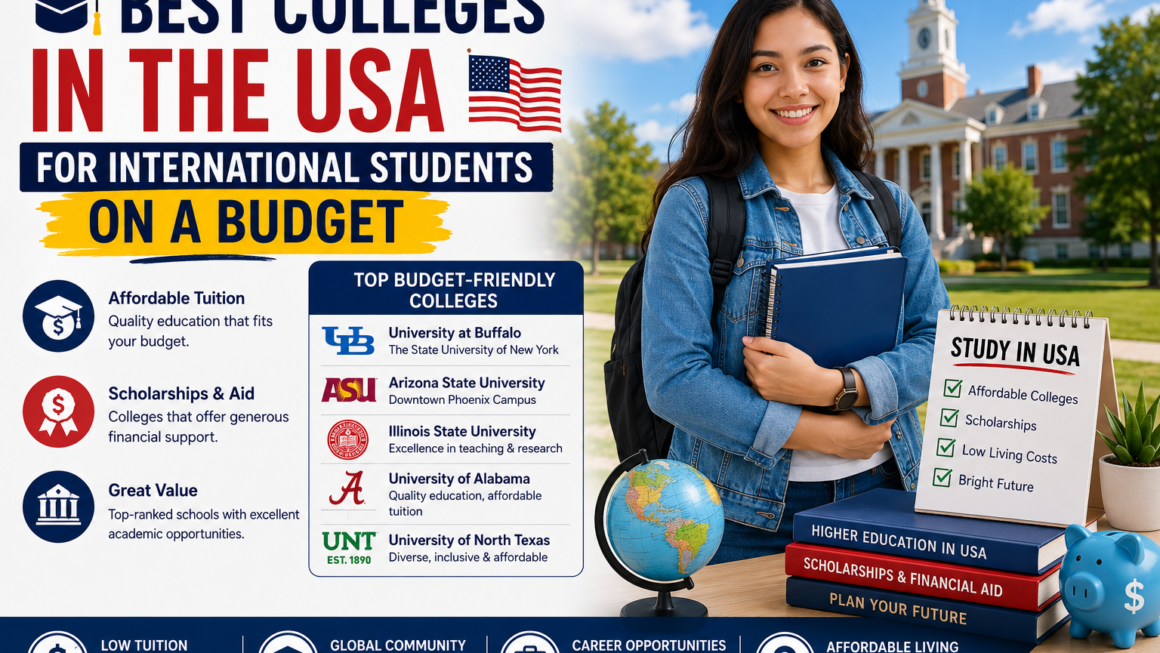
Chasing a university degree in the United States feels incredibly exhilarating, but let’s be honest—the moment you look at the raw costs of tuition and daily life, reality hits you like a brick. Fortunately, if you step back from the hype and plan with a highly strategic, grounded mindset, walking away with an American degree without drowning in life-altering debt is completely doable. At mystudynest, we want to unpack the exact blueprint to map out your study in usa journey without cleaning out your family savings. We will guide you straight toward highly reputable yet affordable universities in usa, point out hidden scholarships for international students, and walk you through top-tier, verified low tuition universities in usa.
Every admission season, millions of hopeful applicants spam search engines looking for shortcuts on how to study in usa for free or tracking down highly elusive fully funded scholarships in usa. While securing a completely free ride is exceptionally rare and fiercely competitive, intentionally targeting cheap universities in usa for international students and properly positioning your application for institutional financial aid for international students can slice your total overhead by 60% to 80%. This breakdown cuts through the marketing noise to highlight the best colleges in usa that successfully balance dirt-cheap operating costs with solid academic standing, including campuses recognized for high-yielding stem courses in usa. Additionally, we will look at how managing your actual cost of living in usa transforms your financial profile into a massive asset when you finally sit down for your crucial f1 visa interview.
The Reality of Higher Education Costs in America
To survive financially in the US, you have to look past the generic price tags. Real college expenses always split into two distinct baskets:
- Tuition and Core Fees: This is what you pay directly for your classroom hours. Public state schools usually slam international applicants with heavy “out-of-state” premiums. Private institutions, on the other hand, charge everyone a flat, identical rate but actively maintain massive private cash pools (endowments) to hand out direct grants.
- True Living Costs (Room and Board): This covers your physical roof, campus meal plans, mandatory health insurance, overpriced textbooks, and personal daily runs. A school situated in a quiet Midwestern town will always cost a fraction of one sitting in the middle of a massive coastal metropolis.
Let’s look closely at the specific colleges delivering genuine, budget-friendly pathways to a US degree.
Category 1: Low-Tuition Public Universities
These specific schools are perfect if you want a guaranteed low base price right out of the gate without gambling your entire future on highly unpredictable merit scholarships.
1. Brigham Young University (BYU) – Provo, Utah
BYU continuously breaks the mold by ranking as one of the cheapest top-tier private institutions in North America. Because it is heavily subsidized by the LDS Church, the base tuition fees remain shockingly low compared to any peer institution of its academic caliber.
- Estimated Annual Tuition: ~$6,500 for church members; ~$13,000 for non-members.
- Why It Worth It: It offers a remarkably secure campus environment, nationally recognized business and engineering tracks, and comfortably sits inside the top 100 national university brackets.
2. University of Texas Rio Grande Valley (UTRGV)
Texas remains a massive magnet for sensible international applicants simply because local living costs are low and state regulations offer unique financial loopholes for global students.
- Estimated Annual Tuition: ~$11,000 – $15,000.
- Why It Worth It: Rent and food in the Rio Grande Valley sit way below the national average, and the campus boasts incredibly strong pipelines into healthcare, nursing, and technical engineering fields.
3. Minot State University – North Dakota
Minot State runs a highly progressive financial model that is almost extinct across the US: they completely wave the international premium and charge global students the exact same base rate as local kids.
- Estimated Annual Tuition: ~$8,500 – $11,000.
- Why It Worth It: By flattening the pricing structure, it gives you a highly predictable, incredibly cheap bill for majors like computer science, criminal justice, and corporate administration.
4. Florida International University (FIU) – Miami, Florida
If you are determined to build a career in a massive, globally connected metropolis without paying astronomical, big-city tuition rates, FIU serves as a phenomenal alternative.
- Estimated Annual Tuition: ~$18,000 – $22,000.
- Why It Worth It: FIU’s international business and hospitality programs routinely rank among the best nationwide, providing instant access to corporate internships and raw networking power.
Category 2: Elite Colleges Offering 100% Financial Aid
Never let a massive, scary sticker price cause you to cross a school off your list. A select group of immensely wealthy elite schools operate on a strict “Need-Blind” framework for international applicants. If your profile is sharp enough to get you past their gatekeepers, they legally promise to cover every single dollar of your family’s demonstrated financial shortfalls.
| University | Location | Average Aid for International Students | Key Feature |
| Harvard University | Cambridge, MA | Full Tuition + Living Costs Covered | Families making below $85,000 go completely free. |
| Amherst College | Amherst, MA | $70,000+ per year | A phenomenal liberal arts hub with an incredibly deep financial aid pocket. |
| Dartmouth College | Hanover, NH | $68,000+ per year | A historic Ivy League campus that treats international applicants completely need-blind. |
| Berea College | Berea, KY | 100% Tuition Scholarship | Every single admitted student gets a full tuition waiver in direct exchange for campus work hours. |
Crucial Reality Check: Acceptance rates at these elite institutions consistently sit between 3% and 10%. Winning a spot requires a virtually flawless academic GPA, massive standardized test scores (SAT/ACT), and a highly unique portfolio of extracurricular achievements.
Side-by-Side Cost Comparison of Budget Universities
This direct table organizes accessible, highly realistic institutions where the core tuition setup stays thoroughly manageable for international family budgets.
| University Name | State | Estimated Annual Tuition (USD) | Standard Acceptance Rate |
| Brigham Young University | Utah | $6,500 – $13,000 | ~67% |
| Minot State University | North Dakota | $8,500 – $11,000 | ~77% |
| University of Texas at El Paso | Texas | $12,000 – $16,000 | ~97% |
| Southeast Missouri State | Missouri | $13,000 – $15,000 | ~86% |
| South Dakota State University | South Dakota | $13,000 – $19,000 | ~86% |
4 Hidden Strategies to Maximize Your US Budget
Finishing your degree without going broke requires a lot more than just hunting down a cheap school; it requires learning how to manipulate the American academic framework to slice your daily bills.
1. The Community College Pathway (The 2+2 Model)
This is easily the single most powerful money-saving hack inside American higher education. Instead of burning cash for four straight years at a massive university, you spend your initial two years at an accredited local community college completing an Associate Degree. Annual community college tuition is astonishingly low, usually hovering around $4,000 to $8,000. Once you wrap up, your credits transfer smoothly over to a major four-year university to finish your Bachelor’s. Your final degree looks identical to someone who paid full price for all four years, but you save a massive fortune.
2. Maxing Out On-Campus Employment
Your F1 visa legally blocks you from taking regular off-campus jobs, but it gives you full clearance to clock up to 20 hours per week on-campus while classes are running. Grabbing a gig at the student library, dining halls, or campus IT desk generally pays anywhere from $12 to $20 an hour. While you can’t use this money to cover your main tuition bills, it easily covers your monthly grocery runs, personal bills, and casual hanging out costs.
3. Snagging Out-of-State Tuition Waivers
Specific states, like Texas and Oklahoma, offer incredible legislative breaks designed for international students. In many of their public universities, if you pull in a competitive institutional merit scholarship worth even a small baseline amount (frequently just $1,000), the university will entirely wave your out-of-state fee structure. This drops your tuition costs down to match what a local American resident pays.
4. Locking into STEM-Designated Majors
When you are locking in your final major, heavily prioritize programs grouped under Science, Technology, Engineering, or Math. The US government awards these specific graduates a massive professional runway known as the STEM OPT Extension. While standard degree holders have to leave or change visas after 12 months of working, STEM grads can legally live and work in the US for up to 36 months. Pulling down a US salary in raw US dollars for three full years right after you graduate lets you completely wipe out your educational investment in record time.
Your Step-by-Step Admission Timeline
Moving your entire life from your home country to an American university campus requires tracking seasonal deadlines very carefully to ensure your visa paperwork lands without a single hitch.
1.Deep Research and School Shortlisting:October – December.
Lock down 5 to 7 target colleges that match your financial capacity. Document their specific international target dates, application processing fees, and financial aid paperwork.
2.Testing and Document Gathering:January – February.
Clear your English proficiency tests (IELTS, TOEFL, or Duolingo) and assemble your official school transcripts, recommendation letters, and custom personal essays.
3.Formal Application Submission:February – March.
Fire off your completed applications through the Common App or individual school portals. If you are aiming for need-based institutional grants, make sure your CSS Profile is locked in.
4.Securing the Legal I-20 Document:April – May.
Right after your acceptance letter, submit your official financial proofs (bank statements or sponsor affidavits) to the school. The international office will then generate your crucial SEVIS Form I-20.
5.SEVIS Payment and Visa Interview:June – July.
Process your required $350 SEVIS fee, submit the online DS-160 visa paperwork, and reserve your formal F1 student visa interview slot at your closest US Embassy or Consulate.
Final Thoughts for International Applicants
Graduating with a powerful, career-changing degree from the United States without burying yourself in debt is entirely realistic if you skip the over-commercialized, massively overpriced coastal brands. Focus your energy on high-performing Midwestern or Southern public state universities, or use the immense cost-cutting power of the community college pathway. Start your planning early, keep your grades immaculate to lock down every available merit dollar, and focus heavily on building a massive professional network the very second your feet touch American soil.